Brushless Motors Explained: The Complete Guide
-
 2026.09.21
-
Uncategorized


A brushless motor is a synchronous electric motor that uses an electronic controller to switch current through its windings instead of relying on mechanical brushes and a commutator. Because there's no physical contact making and breaking the circuit, brushless motors — commonly called BLDC (brushless DC) motors — run cooler, last longer, and tolerate higher speeds than their brushed counterparts. That electronic commutation is what separates brushless motors from every brushed design, and it's the reason SLW Motor builds brushless frames from 16mm up through 60mm+ for continuous-duty robotics, automation, and medical equipment.
What Is a Brushless Motor?
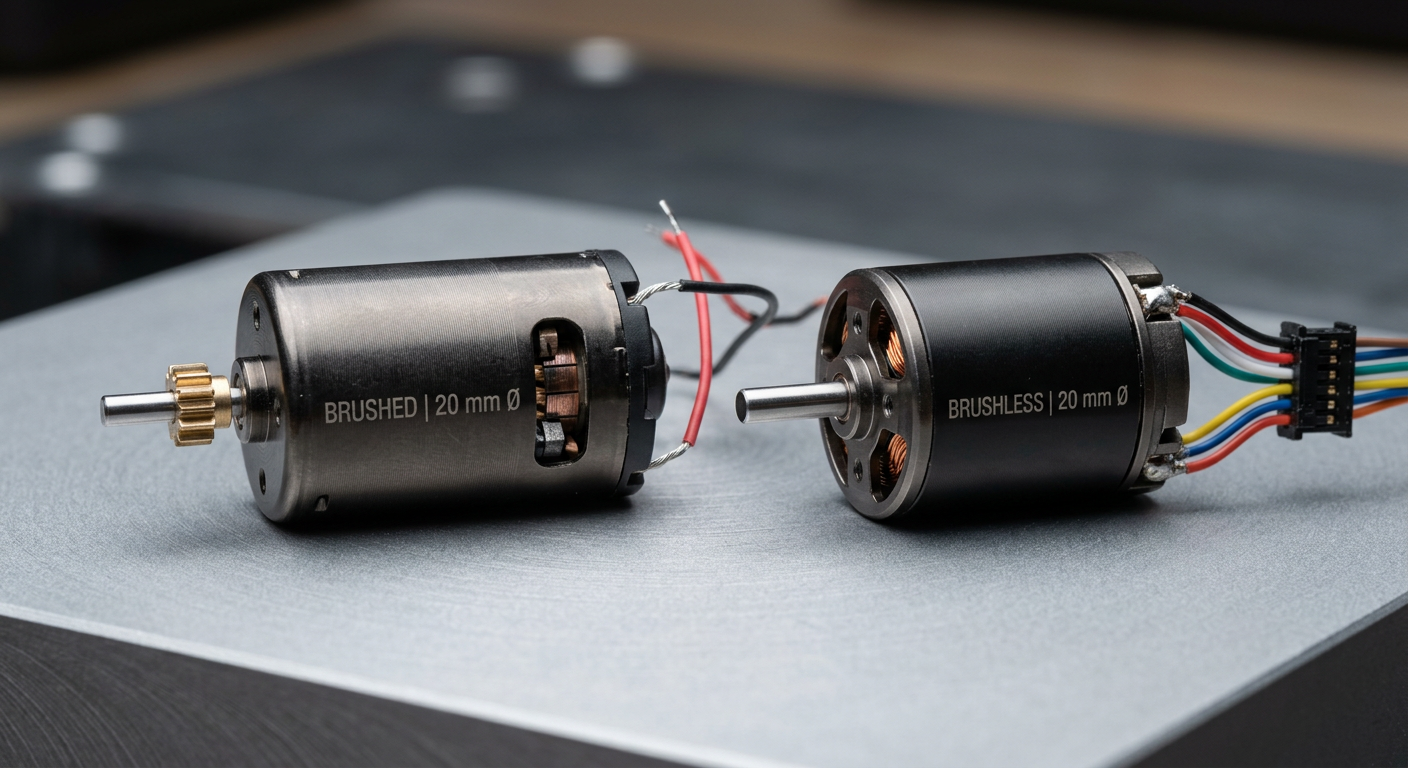
A brushless motor is a permanent-magnet synchronous motor driven by an electronic controller rather than a mechanical brush-and-commutator assembly. In a brushed motor, spring-loaded carbon brushes press against a rotating commutator to reverse current direction and keep the rotor turning — that sliding contact wears down over time and creates electrical noise. A brushless motor removes that contact entirely: the controller does the switching electronically, so there are no brushes to wear, no commutator to arc, and no brush dust to manage.
This distinction is why brushless motors are often described as "electronically commutated" — the commutation function moves from a mechanical part to a circuit. That shift in where commutation physically happens is what limits a brushed motor's speed and lifespan while opening up a brushless motor's higher RPM ceiling and lower maintenance burden.
How Brushless Motors Work
A brushless motor pairs a permanent-magnet rotor with a stator built from multiple winding phases (typically three). An electronic controller energizes those windings in a specific sequence, creating a rotating magnetic field that the permanent-magnet rotor follows. Because the controller — not a mechanical switch — decides exactly when and how much current flows to each phase, it can also adjust speed and torque almost instantly.
To do that sequencing correctly, the controller needs to know the rotor's position at all times. There are two common ways to get that information:
- Sensored (Hall-effect) commutation uses small Hall sensors mounted near the rotor to report position directly to the controller, giving accurate control from a full stop — useful in Hall-sensor brushless motors where precise low-speed starting matters.
- Sensorless commutation estimates rotor position from the back-EMF the spinning magnets generate in the unused winding phase, removing the sensor and its wiring at the cost of some low-speed control. Sensorless brushless motors suit designs where simplicity and a lower parts count matter more than standstill precision.
What Are the Four Main Types of DC Motors?
Most DC motor catalogs — including SLW's own product range — split into four practical families: brushed, brushless (BLDC), coreless, and stepper. Each uses a different rotor/stator arrangement or control method, and each suits a different mix of cost, precision, and duty cycle.
| Motor type | Commutation method | Distinguishing trait |
|---|---|---|
| Brushed DC | Mechanical brushes + commutator | Lowest-cost driver electronics, moderate lifespan |
| Brushless DC (BLDC) | Electronic controller, no physical contact | Longest service life, highest speed ceiling, needs a driver |
| Coreless DC | Windowless rotor winding (brushed or brushless) | Lowest rotor inertia, fastest start/stop |
| Stepper | Electronic pulse sequencing, discrete steps | Precise open-loop positioning without feedback |
A dc brush motor is the simplest and cheapest to drive, but the brush contact limits its service life and top speed. Coreless DC motors swap the iron-core rotor for a lightweight wound coil, cutting rotor inertia so the motor accelerates and reverses faster — a coreless design can be built with either brushed or brushless commutation. Geared stepper motors move in fixed increments driven by pulse sequences, which makes them well suited to open-loop positioning tasks. Brushless DC motors sit apart from all three because they combine the durability of removing brush contact with the ability to run continuously at higher speeds than a brushed or stepper design typically allows.
Types of Brushless Motor Construction
Brushless motors aren't built one single way. The two most common layouts are inner-rotor ("inrunner"), where the permanent-magnet rotor spins inside a stationary stator — favored for high-speed, compact designs — and outer-rotor ("outrunner"), where the magnet ring surrounds the stator windings, giving more torque at a given size at the cost of a larger diameter. A less common but increasingly used variant is the axial-flux layout, where a flat rotor and stator sit face-to-face rather than one inside the other, useful where axial length is tightly constrained.
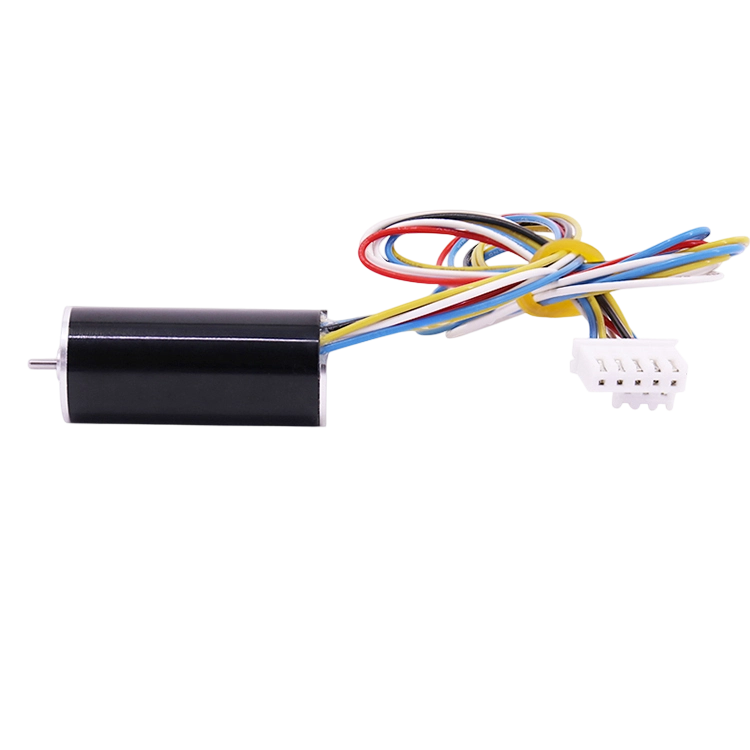
SLW's own catalog carries both layouts side by side: a compact 22mm inner-rotor BLDC motor for higher-speed, space-constrained designs, and a 16mm brushless coreless motor with planetary gearbox that pairs a coreless rotor's low inertia with electronic commutation for fast start-stop cycles. None of these layouts changes the core electronic-commutation principle — they're simply different ways of packaging the same rotating-field mechanism to fit a given envelope or torque requirement.
Advantages of Brushless Motors
- Longer service life — no brushes to wear down means fewer mechanical failure points over the motor's lifetime.
- Higher speed ceiling — without brush-commutator friction limiting rotation speed, brushless designs can spin faster before mechanical wear becomes a concern.
- Better power-to-weight ratio — removing the brush assembly frees up space for windings or magnets, improving output relative to size.
- Lower electrical and acoustic noise — no brush arcing means less electromagnetic interference and a quieter running motor.
- Reduced maintenance — with no brush contact to inspect or replace, brushless motors suit equipment that's difficult or costly to service in the field.
Disadvantages of Brushless Motors
- Higher upfront cost — the motor itself and its required electronic controller typically cost more than a brushed equivalent.
- Mandatory controller/driver electronics — a brushless motor cannot run directly off a battery or simple switch; it always needs a commutation circuit.
- More design complexity — engineers integrating a BLDC motor need to account for controller tuning, commutation timing, and (for sensored designs) sensor wiring.
- Harder field service — troubleshooting a brushless drivetrain usually requires diagnostic tools rather than a visual brush inspection.
Brushless vs. Brushed: Which Is Better?
Neither wins outright — the right choice depends on duty cycle, budget, and expected service life. A brushed motor is cheaper and simpler to drive for light-duty or short-run applications where occasional brush wear isn't a concern; a brushless motor costs more upfront but pays that back in equipment that runs continuously, at higher speed, or somewhere brushes are hard to reach for maintenance. Cost, control complexity, and lifespan trade-offs between the two are broken down at Brushless Motors vs. Alternatives.
If your project's duty cycle calls for continuous operation or a hard-to-reach installation, contact SLW Motor to match torque, voltage, and envelope specs to a brushless design before committing to a drivetrain.
Common Applications of Brushless Motors
Brushless motors show up wherever a design needs sustained runtime, higher speed, or low maintenance in a compact footprint. Common uses include:
- Robotics — joint actuators and drive wheels benefit from the precise, instant speed and torque control electronic commutation provides. See more on motors for robotics applications.
- Automation equipment — conveyors, pick-and-place mechanisms, and inspection stations that run continuously favor brushless motors' longer service life.
- Medical devices — pumps, drug-delivery mechanisms, and diagnostic instruments benefit from the quieter, lower-EMI operation brushless designs offer.
- Smart and precision devices — compact consumer and industrial products that need reliable, low-maintenance motion in a small envelope.
Choosing a Brushless Motor Supplier
Once brushless is the right fit, sourcing shifts from "which motor design" to "which supplier can match voltage, torque, and integration needs without forcing a design around an off-the-shelf part." SLW Motor manufactures brushless DC motors across a defined range and backs that range with process controls buyers can verify:
- Frame sizes from 16mm up through 60mm+, voltage ranges from 6V to 48V
- Customization on torque, speed, voltage, and power to match a specific duty cycle
- Housing and gear material options: brass, stainless steel, powder-metallurgy alloys, engineering plastics
- Value-added integration: encoder installation, PCB soldering, wire harness assembly
- Incoming, in-process, and final inspection on every batch to hold dimensional and performance consistency from prototype through bulk orders
- ISO 9001:2015-certified production, run from a 2,400 m² factory with 56+ staff and 15+ years of motor R&D experience serving clients across 30+ countries
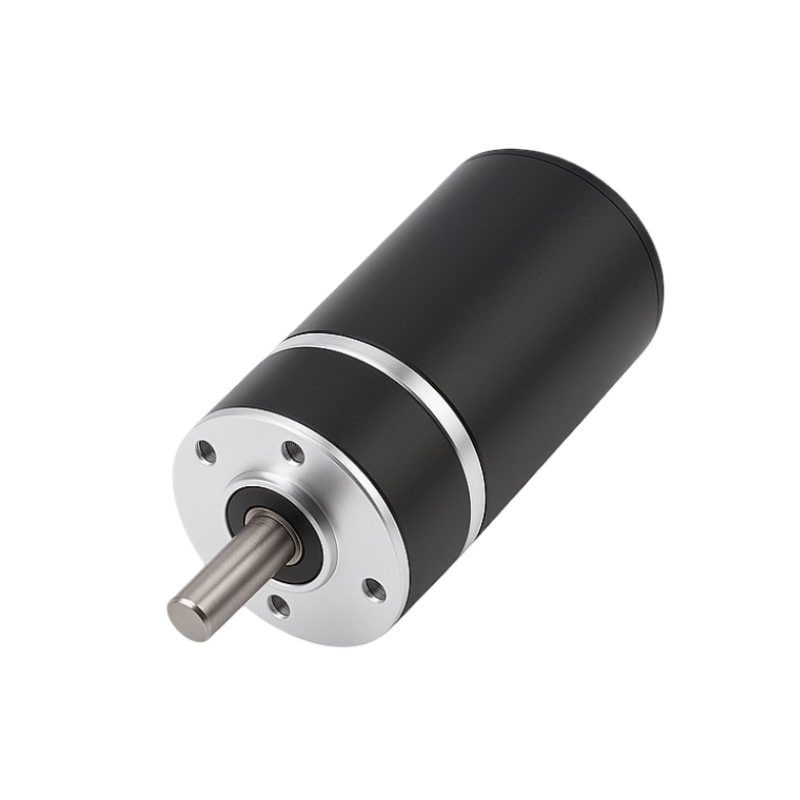
If you're moving from a sample quantity into stable production, explore SLW's brushless DC motor lineup at Brushless DC Motors with High Efficiency, or contact SLW Motor directly with your voltage, torque, and envelope requirements for a quotation.
Frequently Asked Questions
What is a brushless motor?
A brushless motor is a synchronous electric motor that uses an electronic controller instead of mechanical brushes to switch current through its stator windings, creating a rotating magnetic field that a permanent-magnet rotor follows. Because there's no brush-to-commutator contact, the design avoids the wear, arcing, and electrical noise that come with mechanical commutation.
What are the downsides of a brushless motor?
Brushless motors cost more upfront, always require an electronic controller/driver to operate, add design complexity during integration, and are harder to service in the field without diagnostic tools compared to a simple brush inspection.
Which is better, a brushed or brushless motor?
It depends on the application: brushed motors are cheaper and simpler for light or short-duty use, while brushless motors justify their higher cost in continuous-running, high-speed, or hard-to-service equipment. Cost, control complexity, and lifespan trade-offs between the two are broken down at Brushless Motors vs. Alternatives.
What is the difference between a brushless motor and a normal motor?
"Normal motor" usually refers colloquially to a brushed DC motor. The difference is the commutation method: a brushed motor switches current mechanically through brush-commutator contact, while a brushless motor switches it electronically with no physical contact.
What's the difference between "brushless motors" and "BLDC motors"?
There isn't one — BLDC is simply the technical abbreviation for brushless DC motor. The two terms describe the same electronically commutated, permanent-magnet motor design.
Is a brushless motor the same as a brushless AC motor?
Not quite. A BLDC (brushless DC) motor runs from a DC supply through an electronic controller that mimics AC-like phase switching, while a brushless AC motor is designed to run directly from an AC supply using true sinusoidal current — the internal construction is similar, but the power input and control approach differ.