DC Electric Motor Explained: The Complete Guide
-
 2026.09.21
-
Uncategorized


A DC electric motor turns direct current into rotation, and nearly every compact drive in robotics, medical devices, and battery-powered equipment is one — brushed, brushless, coreless, or geared. Here is how it works, what the main types are, and how to choose one.
What Is a DC Electric Motor?
A DC electric motor is a device that converts electrical energy from a direct current source into mechanical rotation, using magnetic force generated by current flowing through a coil. Unlike alternating current, direct current flows in one steady direction — which is exactly what makes the internal mechanics of a DC motor distinct from an AC motor's.
On a spec sheet, a DC motor is defined by two things: it runs on a fixed-polarity supply (batteries, a DC power adapter, or a rectified/regulated DC rail), and it has some internal mechanism — mechanical or electronic — for repeatedly flipping current direction inside itself to keep spinning. That covers everything from the small motor inside a toy car to industrial permanent-magnet DC motors driving conveyors.
Almost every DC motor you'll encounter — brushed, brushless, coreless, geared — shares the same underlying physics. What differs between them is how current gets switched inside the motor, and whether a gearbox is attached to the output shaft.
How a DC Electric Motor Works
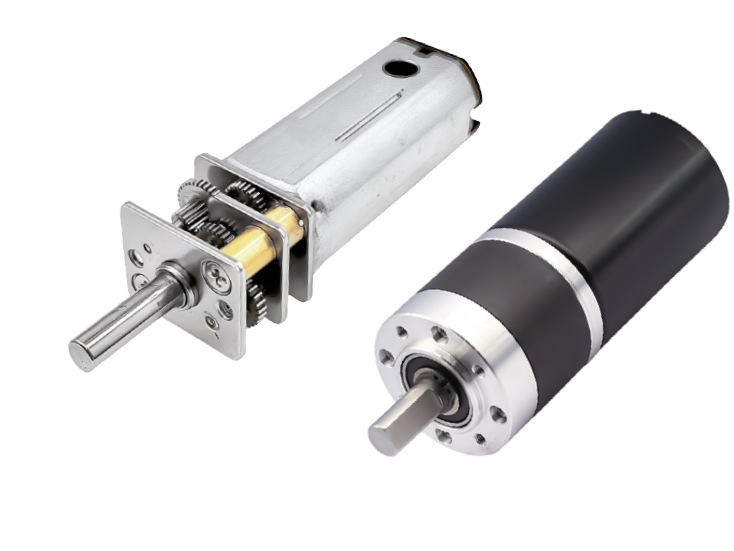
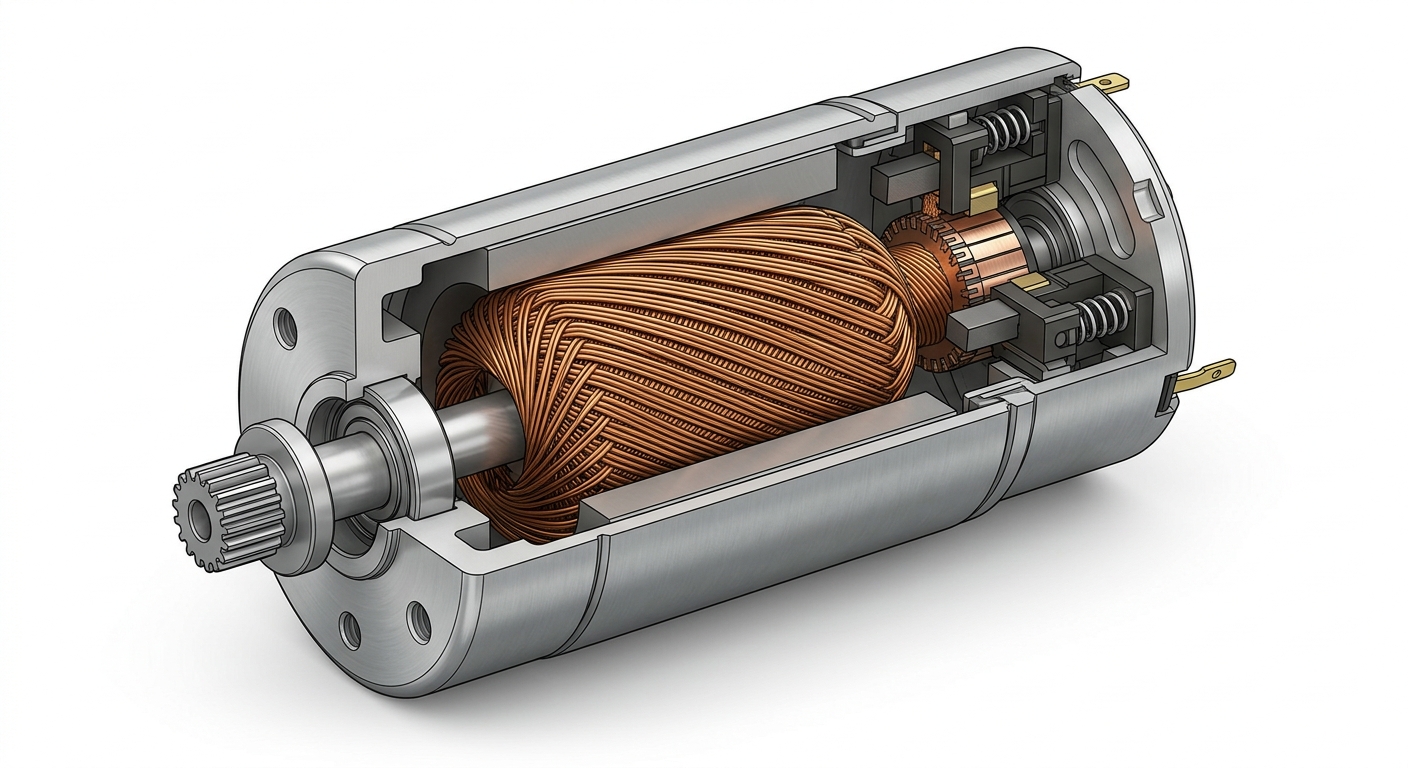
Inside a DC motor, a coil of wire (the winding) sits inside a magnetic field created by permanent magnets or electromagnets. When direct current runs through the coil, it generates its own magnetic field. Two magnetic fields that don't align push against each other — that push is the force that turns the rotor.
In a basic layout, one part of the motor stays fixed (the stator, usually carrying the magnets) and one part spins (the rotor, usually carrying the current-fed coil). The spinning part connects to an output shaft, which is where the mechanical work leaves the motor. Voltage and current scale that output directly: a small 20mm brushed DC motor running at 6V might spin around 7,000 RPM with no load, while the same motor design at 24V can exceed 11,500 RPM — with proportionally higher torque available before it stalls. Most micro DC motors on the market run somewhere between 3V and 48V depending on size and winding.
Why Commutation Matters
A motor that only pushed in one direction would rotate a quarter-turn and stop, aligned with the magnetic field. To keep it spinning continuously, the current through the coil has to keep flipping direction at the right moment — a process called commutation. This is the single most important design fork in the entire DC motor category, because how that switching happens splits DC motors into two families.
Some motors do it mechanically, with physical brushes rubbing against a rotating commutator to reverse current as the shaft turns — that's a brushed DC motor. Those brushes are also the main wear point: they typically hold up for several thousand hours of continuous running before they need replacing. Other motors do it electronically, sensing rotor position and switching current through stationary coils with no physical contact at all — that's a brushless DC motor, which removes that wear point entirely. Both are still DC motors by definition; they just solve the same switching problem in different ways.
Main Types of DC Electric Motors (Quick Map)
"DC electric motor" is an umbrella term. In practice, buyers are usually choosing between a handful of sub-types, each suited to different mechanical and electrical needs — the DC motor types guide goes deeper on each.
| Type | How current is switched / built | Typically chosen for |
|---|---|---|
| Brushed DC motors | Mechanical brushes + commutator | Low cost, simple drive electronics |
| Brushless DC (BLDC) motors | Electronic switching, no brushes | Longer life, higher speeds, less electrical noise |
| Coreless DC motors | Ironless (coreless) winding, brushed or brushless | Very low inertia, quick response, light weight |
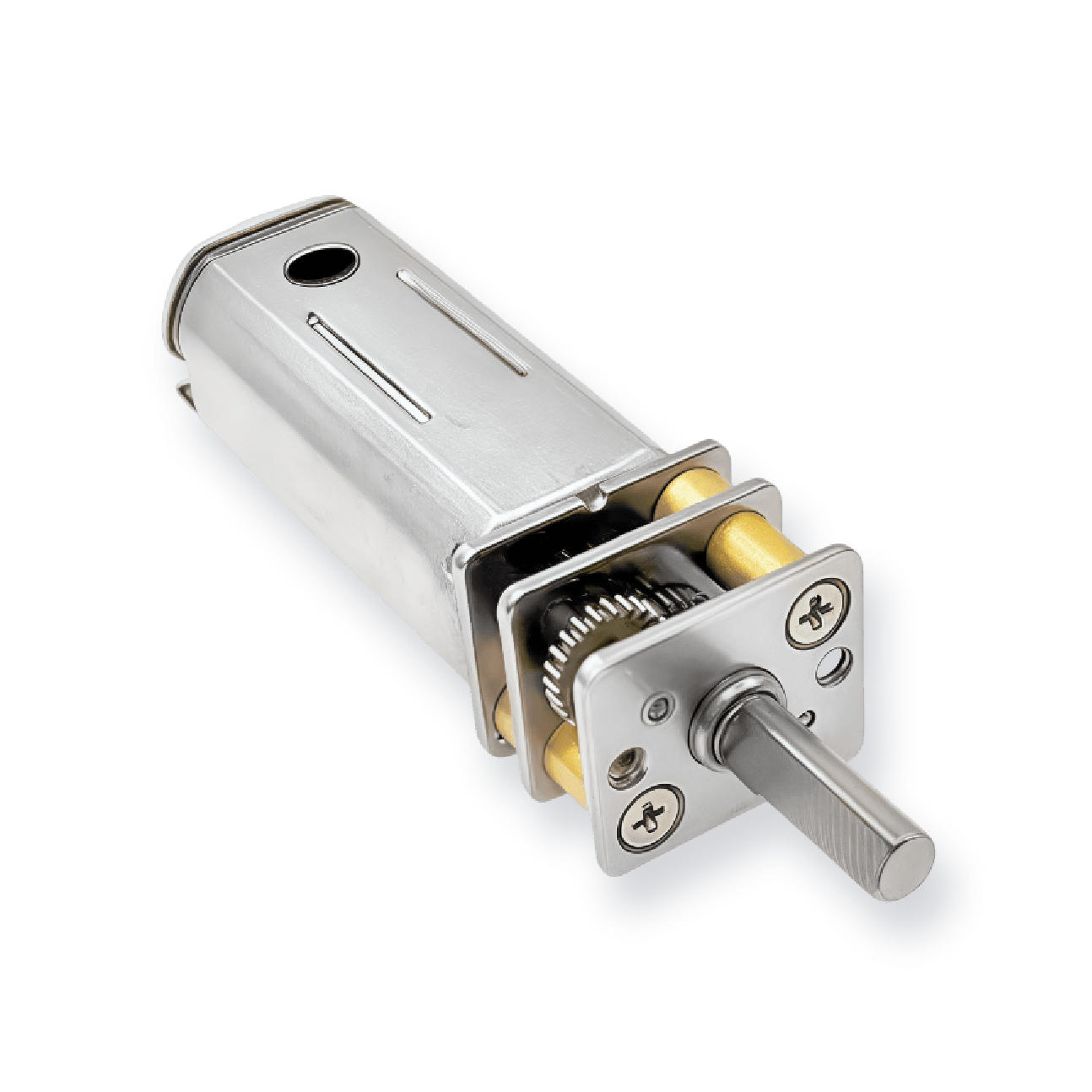
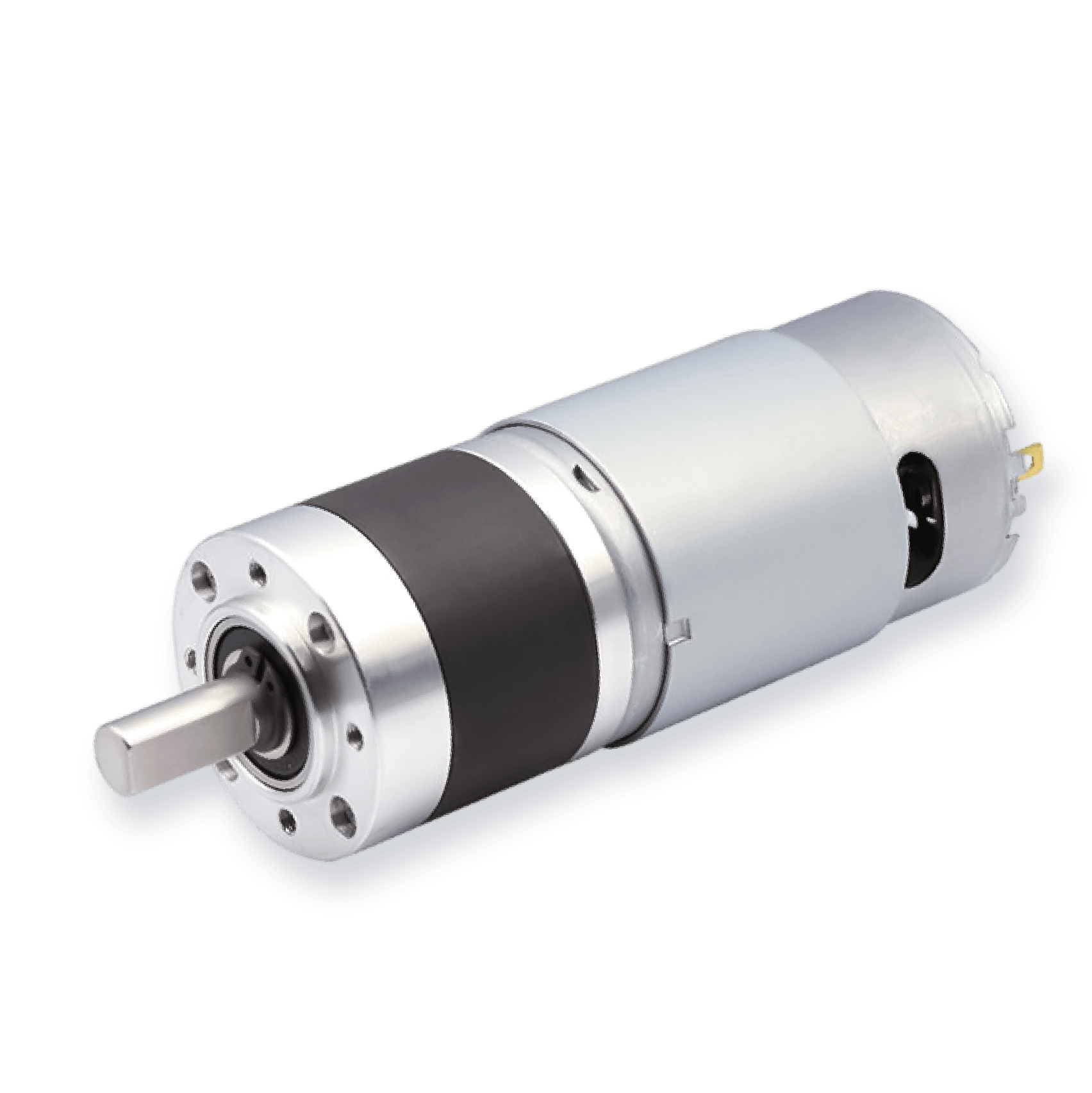
| Planetary gear motors | Any DC motor + planetary gearbox | High torque in a compact envelope |
| Geared stepper motors | Step-driven, geared for torque | Precise positioning without a feedback loop |
Because coreless rotors have no iron core wound around them, they carry a fraction of the rotational inertia of an equivalent iron-core rotor — which is why they spin up and stop faster for the same drive current, a trait that matters in start-stop positioning tasks. A motor can also belong to more than one row at once: a brushless motor can be coreless too, and either can be paired with a planetary gearbox.
DC Motor vs. AC Motor: Why Use DC?
The core reason engineers reach for a DC motor rather than an AC motor is control simplicity. Varying a DC motor's speed is largely a matter of varying its supply voltage or duty cycle — no separate frequency drive is needed the way it typically is with AC induction motors. That makes DC motors a natural fit anywhere the power source is already DC: batteries, solar panels, USB or low-voltage DC rails, and portable equipment with no access to mains AC at all.
DC motors also deliver strong starting torque right from a standstill, which matters in applications that need to move a load from zero speed without a warm-up period — robotic joints, actuator arms, and small pumps, for example. Because the whole drive chain (battery to motor) stays in the DC domain, there's no rectification or inversion stage to add cost and complexity for battery-powered or DC-bus designs.
None of this makes DC universally cheaper or lower-maintenance than AC — that depends heavily on motor size, duty cycle, and whether brushes are involved — but for low-voltage, variable-speed, portable, or precision-motion applications, DC is usually the more direct path.
Common Applications of DC Electric Motors
DC motors show up wherever a design needs compact, controllable rotation from a DC power source rather than mains AC. Typical territory includes:
- Robotics and automation — joint actuation, grippers, and conveyance where precise, variable-speed motion is required.
- Medical devices — infusion pumps, diagnostic equipment, and other battery- or low-voltage-powered instruments where quiet, compact motors matter.
- Automotive and EV auxiliary systems — small actuators and accessory drives running off a vehicle's DC bus rather than direct AC power.
- Consumer appliances — anything from small kitchen tools to personal-care devices that run on battery packs.
- Battery- and solar-powered equipment — portable tools and off-grid devices that never see an AC supply at all.
A DC electric motor for a car project or a go-kart build follows the same logic: these are typically higher-voltage, higher-torque geared DC motors sized to match the load and battery voltage of the vehicle.
Where to Get a DC Electric Motor
For learning, tinkering, or a one-off school or hobby project, a DC motor is easy to get your hands on: hobby electronics retailers sell small brushed motors bundled with battery clips and wheels, and salvaged toys or small appliances are a free source of working motors for experimentation. This is the right path if the goal is understanding the mechanism, not shipping a product.
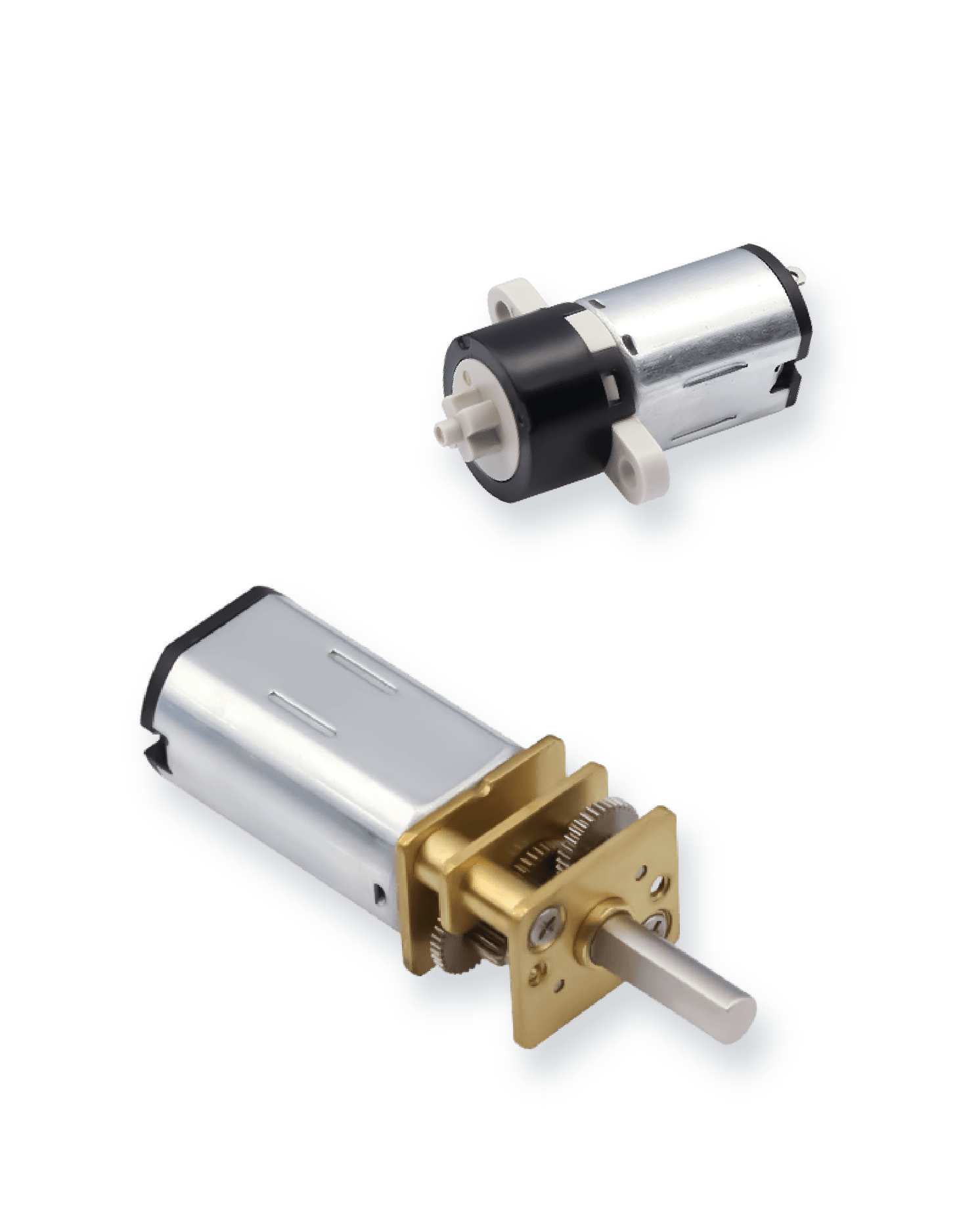
Sourcing looks different once a motor has to perform to a spec inside a real product — a fixed torque and speed at a defined voltage, a specific shaft and mounting envelope, consistent performance across a production run, and sometimes an encoder or wiring harness already attached. That's when an engineered supplier replaces a hobby kit, and it's where compact coreless DC motors earn their place — their ironless winding gives low inertia and fast response in a small envelope, which is exactly what precision, low-power builds in medical devices, robotics, and automation need.
How to Choose the Right DC Electric Motor
Once you know it's a DC motor you need, the next decisions narrow things down fast. Work through this checklist before requesting quotes:
- Voltage — what your battery or power supply actually delivers; small DC motors commonly run anywhere from 3V up to 48V depending on size.
- Torque and speed — the load you need to move, and how fast; see torque and speed specs to check before buying a motor against your own load figures.
- Size and envelope — the physical space available, since diameter and length constrain which motor families even fit.
- Gearing needs — planetary gearboxes pack high torque density into a compact housing with low backlash and good efficiency; spur gearboxes are simpler and typically the most efficient of the three but need more axial length for the same ratio; worm gearboxes trade some efficiency for self-locking, holding a load in place without back-driving even when power is cut.
- Encoder or feedback needs — closed-loop positioning requires a motor with encoder integration matched to your control loop.
- Duty cycle — continuous running versus intermittent bursts changes how much heat the motor needs to shed and how it should be rated.
Deciding between brushed and brushless motors comes down to duty cycle, noise tolerance, and control budget. Weighing DC against other drive technologies entirely is a separate question, covered in DC Electric Motor vs the Alternatives: How to Choose.
SLW Motor supplies both standard catalog motors and custom-engineered configurations — voltage, torque, speed, gearing, housing material, and encoder or wire-harness integration can all be adjusted to a project's spec, with samples available before committing to a production run. Contact SLW Motor with your voltage, torque, and envelope requirements to get a quote.
FAQ
What is a DC electric motor?
A DC electric motor is a device that converts electrical energy from a direct current source into mechanical rotation using magnetic force. It covers a wide range of sub-types — brushed, brushless, coreless, and geared — all sharing the same basic current-to-rotation mechanism.
Where can I get a DC motor at home?
Hobby electronics retailers sell small brushed motors, often bundled into kits with battery clips and wheels for learning. Salvaged toys or small appliances also contain usable motors for tinkering. This differs from sourcing a motor engineered to a specific voltage, torque, and mounting spec for an actual product.
Are DC motors still used?
Yes. DC motors remain standard in robotics, medical devices, automation equipment, and battery- or solar-powered products, where simple variable-speed control and compact size matter more than raw industrial power. AC drives have taken over much of heavy industrial motor use, but not this territory.
Why use a DC motor instead of AC?
DC motors offer simpler variable-speed control (usually just adjusting supply voltage), run directly off batteries or DC power supplies without a rectification stage, and deliver strong torque from a standstill — useful for portable equipment and precision motion starting from zero speed.
How much does a DC electric motor cost?
Cost varies widely by size and type. Small hobby motors sold for educational kits run just a few dollars each, while precision or custom-engineered motors for products are quoted against a specific voltage, torque, and envelope spec rather than sold at a fixed catalog price.
What's a good DC motor for a go-kart or car project?
These builds typically need higher-voltage, higher-torque geared DC motors matched to the vehicle's battery voltage and load rather than a small hobby motor. Planetary or worm gear motors are the usual starting point for that kind of torque requirement.
What's included in a DC motor kit for hobby projects?
A typical beginner kit includes a small brushed DC motor, a battery clip or holder, and simple output hardware like wheels or a propeller. These kits are built for education and experimentation, not for the consistent performance a production product needs.
Who manufactures DC electric motors?
Both large industrial motor suppliers and specialized micro-motor manufacturers serve this category, at very different scales. SLW Motor, for example, focuses specifically on micro and small-scale precision DC motors and gearboxes, including coreless DC motors, for OEM and custom applications rather than large industrial drives.