DC Electric Motor vs Alternatives: How to Choose
-
 2026.09.21
-
Uncategorized


"DC electric motor" names a category, not one design — brushed (cored), coreless, and brushless motors are all DC motors, built differently. Two questions trip up most buyers: whether DC is even the right power type versus AC or stepper drives, and which DC construction fits the job. Treat those as two separate, independent axes: commutation method (brushed vs. brushless — how current switches direction) and rotor construction (cored vs. coreless — what the winding is built on). Mixing the two axes up is the most common sizing mistake in the DC family.
What Is a DC Electric Motor?
A DC electric motor converts direct current into rotation through the interaction of a magnetic field and a current-carrying winding. Speed and torque scale predictably with applied voltage and current, which is why DC motors dominate battery-powered and low-voltage equipment. For winding types and voltage behavior in more depth, see the DC electric motor guide.
DC Electric Motor vs AC Motor
- Power source: DC motors run directly off batteries or low-voltage DC rails; AC motors need mains power or an inverter.
- Speed control: DC speed is set by voltage through simple PWM; AC speed control requires a variable-frequency drive (VFD), a separate piece of hardware whose cost rises with motor power.
- Size: DC motors scale down to a few millimeters for handheld devices; AC motors are reserved for fixed, continuous-duty industrial equipment.
Battery-powered, compact, or variable-speed devices favor DC by default.
DC Electric Motor vs Stepper Motor
DC and brushless DC (BLDC) motors spin continuously and, with an encoder, hold closed-loop position feedback. Steppers move in fixed increments open-loop, without feedback — a common hybrid stepper turns 1.8° per step (200 steps per revolution) and holds that position at standstill through magnetic detent torque alone, without active power. That makes steppers simple to position precisely at low speed, but less efficient than a DC or BLDC motor for continuous high-speed rotation. Stepper Gear Motor vs BLDC Encoder: Positioning breaks down which one holds position better under load.
DC Electric Motor vs Linear/Servo Actuators
When the end goal is straight-line motion, a DC motor plus a lead screw or gearbox — or a purpose-built linear actuator — can replace a rotary output. Lead screw pitch sets stroke-per-revolution, which is the number that decides whether a rotary motor driving a screw or a dedicated linear actuator reaches the target stroke faster. Duty cycle matters too: continuous cycling wears a lead screw's nut faster than a ball-screw actuator, and a screw-driven actuator can hold position without power while a direct-drive stage cannot.
Inside the DC Family: Cored, Coreless, and Brushless
Two design axes get conflated constantly. Commutation method — brushed vs. brushless — is how current switches direction: mechanical brushes vs. electronic switching. Rotor construction — cored (iron-core) vs. coreless (ironless) — is the physical winding. These combine independently: a motor can be brushed-cored, brushed-coreless, or brushless-coreless.
What Does a Coreless Motor Mean?
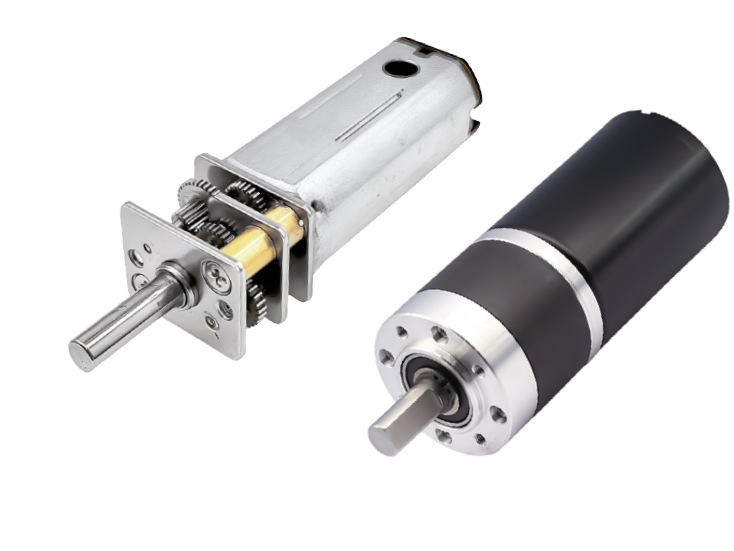
A coreless motor has no iron core in the rotor — the winding is a self-supporting copper coil rotating around the magnet instead of a wound-iron armature. Removing the iron mass cuts rotor inertia and largely eliminates cogging torque, so the motor accelerates, decelerates, and holds low speed more smoothly. A conventional iron-core equivalent for comparison is the 16mm 050 Micro Brushed DC Motor, which uses a wound-iron rotor rather than an air-core winding.
What Is the Difference Between a Coreless and a Cored DC Motor?
| Attribute | Cored (Iron-Core) | Coreless (Ironless) |
|---|---|---|
| Rotor construction | Wire wound on an iron core | Self-supporting copper coil, no core |
| Inertia / response | Heavier rotor, slower start-stop | Lighter rotor, faster response |
| Cogging at low speed | More noticeable | Reduced |
| Thermal handling | Iron core aids heat dissipation | Less thermal mass; sizing matters more |
The coreless rotor's lower mass is what drives the faster response and lower cogging — there's simply less material to accelerate and less iron to resist smooth rotation at low speed. Brush wear is a separate variable: brushed designs, cored or coreless, typically run hundreds to a few thousand hours before brush wear becomes limiting, depending on duty cycle and load, while brushless designs remove that wear mechanism entirely.
Coreless Electric Motor vs DC Motor: Which Category Is Which?
Coreless is a rotor construction, not a separate motor category — a coreless motor is a type of DC motor. The name describes how the winding is built, the same way "brushed" and "brushless" describe the commutation method. Coreless variants exist in both brushed and brushless form, so a coreless motor never competes against "DC motors" as a whole; it competes against cored construction within the DC family.
Coreless Motor vs Brushless Motor: Key Differences
| Attribute | Coreless | Brushless (BLDC) |
|---|---|---|
| What it describes | Rotor/winding construction | Commutation method |
| Brush wear | Depends on brushed vs. brushless variant | None |
| Typical strength | Low inertia, minimal cogging, quiet running | Long service life under continuous duty |
| Can combine? | Yes — brushless coreless motors exist | Yes |
A brushless coreless motor stacks both benefits — low-inertia responsiveness plus brush-free commutation — at a higher build cost than either trait alone.
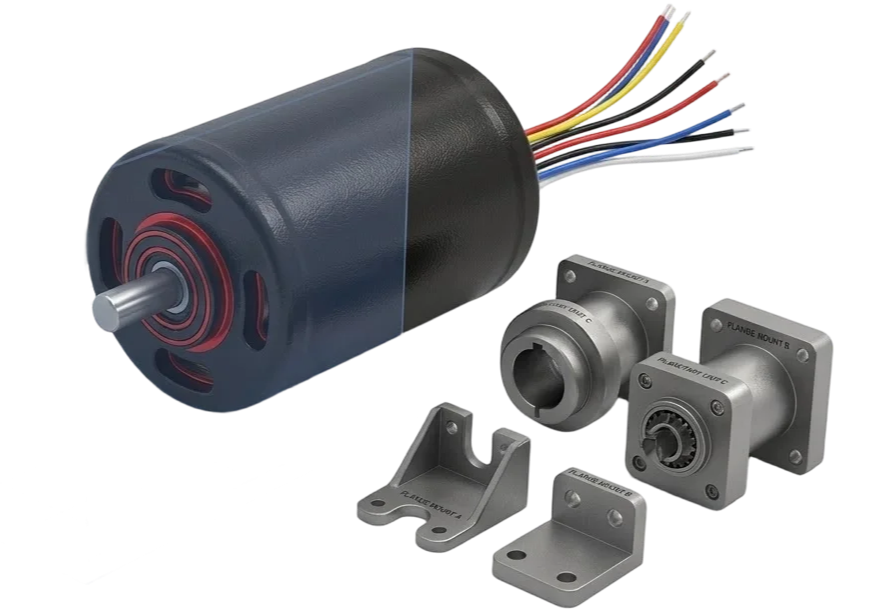
Which Is Better, Coreless or Brushless?
There's no universal winner — match the construction to the duty cycle:
- Precise dosing, handheld, or intermittent-use devices where low inertia and quiet motion matter → favor coreless.
- Continuous-duty, high-speed equipment where brush wear is the limiting factor → favor brushless.
- Budget-constrained, low-cycle applications → a standard brushed cored motor may outperform both on cost.
- Applications needing both traits at once → a brushless coreless motor, accepting the added cost.
Browse the coreless DC motors lineup for brushed-coreless, brushless-coreless, and encoder-ready configurations sized from roughly 10mm up.
Quick Decision Checklist
| Application type | Recommended direction | Why |
|---|---|---|
| Medical dosing pumps, handheld diagnostic devices | Coreless (brushed or brushless) | Low inertia, low cogging, compact envelope |
| Continuous-duty robotics or automation stages | Brushless (cored or coreless) | No brush wear under sustained running |
| Cost-sensitive consumer or low-cycle devices | Standard brushed cored | Lowest cost per unit for light duty |
| Closed-loop positioning with feedback | Brushless or coreless + encoder | Encoder integration supported on both constructions |
If none of the DC options fit — open-loop step precision or fixed-line AC power — work through DC brush motor vs alternatives, brushless motors vs alternatives, or the transmission-side decision in planetary gear motor vs alternatives. For the brushed-vs-brushless decision specifically, the brushed vs brushless DC motors buyer's framework is the most direct read.
Not sure which construction fits your torque, speed, or duty-cycle target? Contact SLW Motor with your application details for a construction recommendation before you commit to a spec.
FAQ
What does a coreless motor mean?
A coreless motor has a rotor winding with no iron core — a self-supporting copper coil instead of wire wound around an iron armature. Removing the iron mass lowers rotor inertia and reduces cogging torque, so the motor starts, stops, and runs at low speed more smoothly than an equivalent iron-core design.
Which is better, coreless or brushless?
Neither is universally better. Coreless favors low inertia and smooth low-speed motion for intermittent or precision use; brushless favors long service life under continuous running since it removes brush wear entirely. A brushless coreless motor combines both traits at a higher build cost.
Coreless electric motor vs DC motor — are they different categories?
No. A coreless motor is a type of DC motor, not a competing category. "Coreless" describes the rotor construction, the same way "brushed" or "brushless" describes the commutation method — coreless designs exist in both brushed and brushless form within the DC motor family.
Can a coreless motor also be brushless?
Yes. Brushless coreless motors are a standard configuration — they pair an ironless rotor winding with electronic commutation instead of mechanical brushes, giving low inertia and minimal cogging together with the absence of brush wear under continuous duty.
Is a DC electric motor better than an AC motor for small devices?
For small, battery-powered, or portable devices, yes — DC motors run directly off low-voltage supplies and offer simple voltage-based speed control. AC motors suit fixed-line, continuous industrial duty where mains power and constant-speed operation are the norm.
What's the difference between a DC motor and a stepper motor?
A DC or brushless DC motor spins continuously and, with an encoder, holds closed-loop position feedback. A stepper motor moves in fixed increments open-loop, without feedback, which suits precise low-speed indexing but is generally less efficient for continuous high-speed rotation.