DC Brush Motor vs the Alternatives: How to Choose
-
 2026.09.21
-
Uncategorized


Weighing a DC brush motor vs the alternatives comes down to one practical question once a brushed motor is already on the bench or the bill of materials: stay with it, or move to a technology that fits the application better. Brushless, coreless, and stepper motors each solve a different limitation of a brushed design, at a different cost.
What a DC Brush Motor Actually Gives You
A brushed DC motor drives current into its rotor windings through carbon or metal brushes riding against a rotating commutator. That direct mechanical contact is what lets the motor run on plain DC voltage or basic PWM with no external controller — and it's also the point that wears with use. How a brushed DC motor works mechanically explains why that trade-off exists. This comparison sets brushed against brushless, coreless, and stepper motors; for a purchasing checklist on the brushed-vs-brushless decision alone, see the brushed vs brushless DC motors buyer's framework.
Brush Motor vs Brushless Motor
Brushless motors replace the brush-commutator contact with electronic commutation, removing the one mechanical wear point a brushed design can't avoid. That comes with a more expensive controller and motor build.
| Factor | Brushed DC Motor | Brushless DC Motor |
|---|---|---|
| Construction | Brushes + commutator, simple rotor | Electronically commutated, no brush contact |
| Typical efficiency | Roughly 75–80% | Roughly 85–90% |
| Brush wear / life | Brushes typically wear out over roughly 1,000–3,000 hours of continuous running before performance drops | No brush contact to wear; other components (bearings, windings) still age normally |
| Noise / EMI | More mechanical and electrical noise from brush contact | Cleaner electrical switching, lower noise |
| Controller complexity | Runs on plain DC voltage or simple PWM | Requires an ESC/driver for electronic commutation |
| Unit cost | Lower — no driver board required | Higher; the ESC/driver adds a board, connectors, and firmware to the motor system's bill of materials |
The efficiency and wear gaps both scale with duty cycle. A motor running in short bursts loses far less to brush friction than one running continuously at full speed, so the gap narrows for short-duty devices and widens for continuous-run ones. Net: brushless wins on efficiency, brush life, and noise under sustained use; brushed wins on simplicity and lower total system cost, particularly for short-duty or price-driven designs. Electronic commutation is the design detail behind SLW brushless DC gear motors. Whether a brushless motor should ever step back down to something simpler is a separate question, weighed against a different set of constraints — that trade-off runs the other direction in brushless motors vs the alternatives.
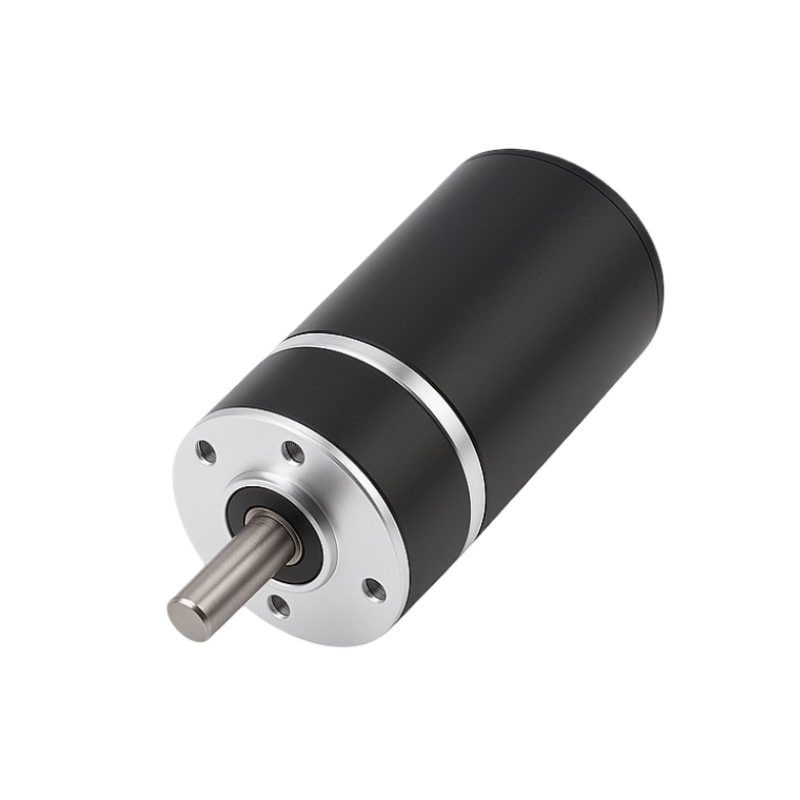
Brushed vs Brushless DC Motor: Which Wins for Your Application?
Duty cycle and how much the driver electronics are allowed to cost decide which technology fits, more than any single spec does.
| Application Type | Recommended Motor | Why |
|---|---|---|
| Short-cycle, battery-cost-sensitive, disposable device | Brushed DC | No ESC needed; brush wear is a non-issue over a short device life |
| Continuous-run, precision speed control | Brushless DC | Higher efficiency and cleaner regulation under sustained load |
| Long service life, minimal maintenance access | Brushless DC | No brush wear point to inspect or replace |
| Quiet operation (medical, consumer) | Brushless DC | Lower mechanical and electrical noise |
| High-volume, price-driven production | Brushed DC | No added ESC cost per unit at scale |
A design landing mostly in the left column keeps brushed DC by default, not as a compromise. A design landing in the right column is paying the ESC premium for capability it genuinely needs.
DC Brush Motor vs Other Alternatives
Brushless isn't the only technology that solves a problem a brushed motor can't.
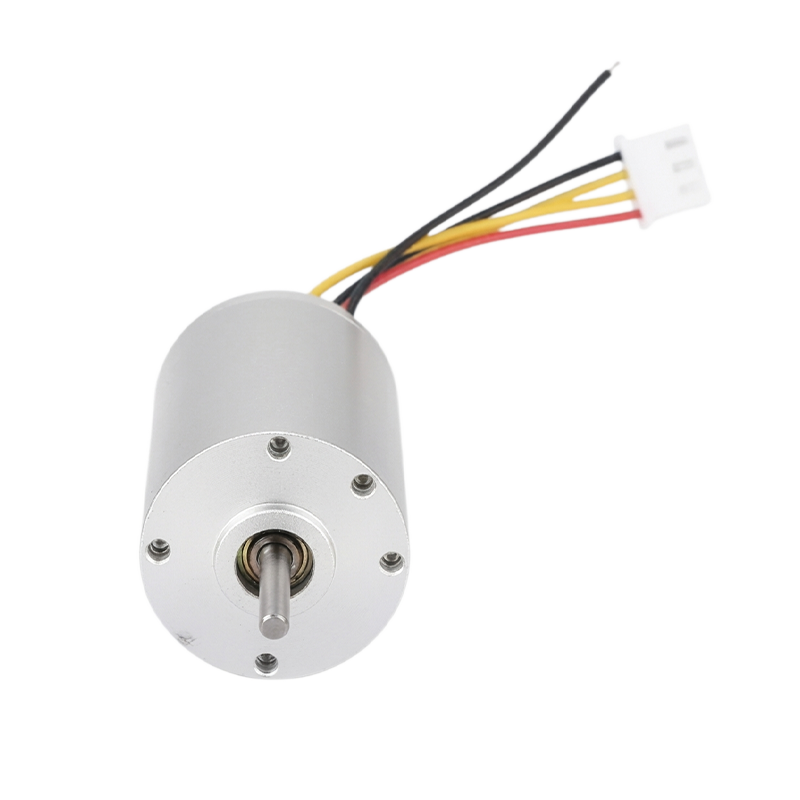
Brushed vs Coreless DC Motors
A coreless motor drops the iron core from the rotor, using a self-supporting winding instead. Cutting that mass lowers rotor inertia, letting a coreless motor accelerate and decelerate faster than an iron-core brushed motor for the same applied voltage — at a higher unit cost, since coreless windings are more involved to build. It's the right trade when a device needs quick starts and stops in a tight envelope, not raw torque or the lowest cost. Coreless DC motor construction earns its added cost specifically when low inertia is the actual constraint.
Brushed vs Stepper Motors
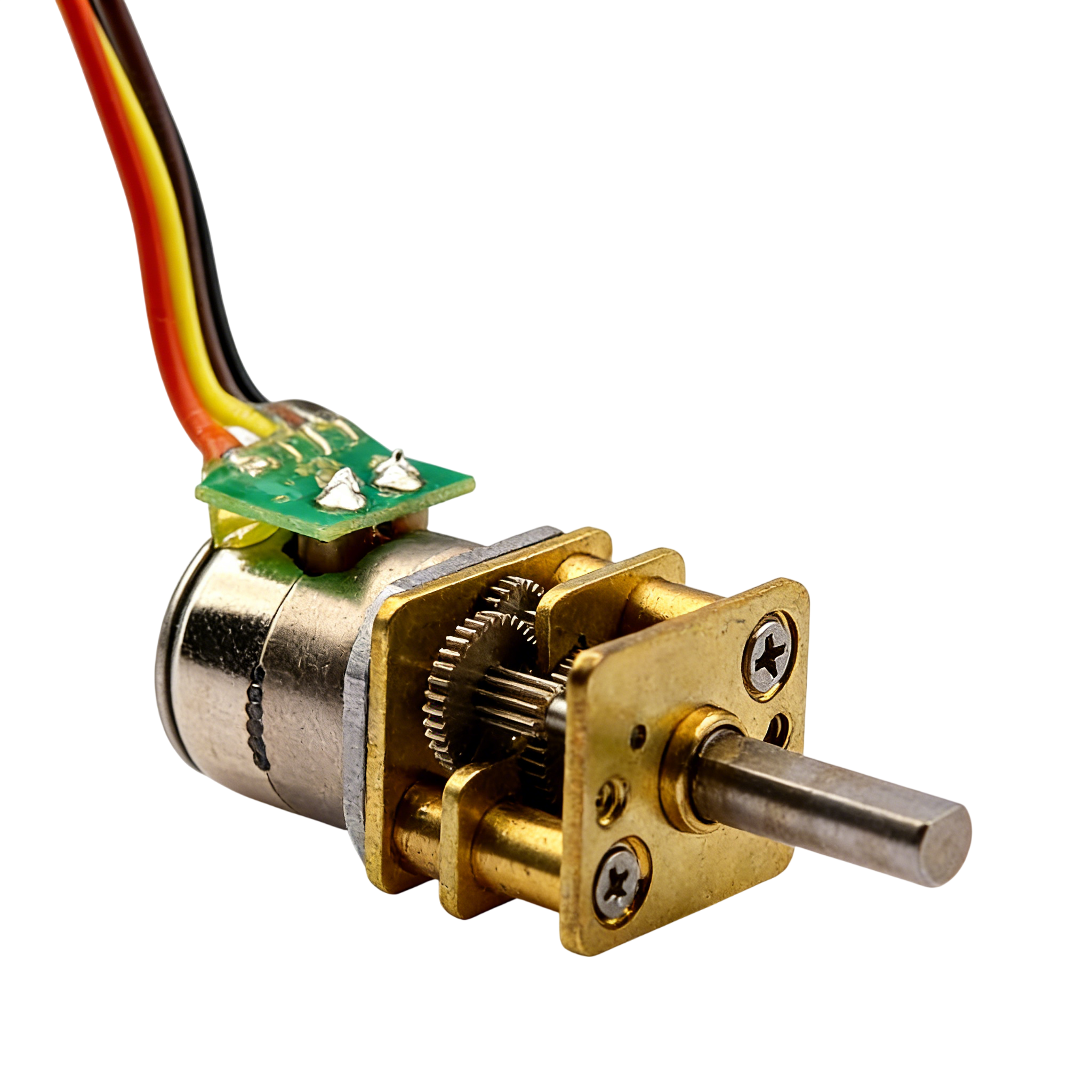
A stepper motor moves in fixed increments per electrical pulse — commonly 1.8° per step (200 steps/revolution) or 0.9° per step (400 steps/revolution) — rather than spinning continuously. It also holds position with holding torque from energized windings at zero speed, something a plain brushed motor can't do without an added brake or a self-locking worm gearbox stage. The trade-offs: steppers can hit mechanical resonance at certain step rates, causing vibration or missed steps, and holding torque continuously energized at standstill generates heat that has to be managed in enclosed housings. A brushed motor has none of that complexity but also no native position feedback. SLW stepper gear motors are the right move once open-loop positioning, not continuous rotation, is the actual requirement.
Choosing between DC motor technology altogether and AC, servo, or other actuator families turns on voltage supply and control architecture, not brush wear — that broader question is worked through in DC electric motor vs the alternatives. Planetary versus worm gearing changes backlash and self-locking behavior independently of whether the motor driving it is brushed or brushless, a separate decision detailed in planetary gear motor vs the alternatives.
Decision Framework — When Brushed DC Is Still the Right Choice
Brushed DC is the correct call, not a fallback, when a project matches two or more of these:
- Budget-constrained project where driver electronics cost matters as much as motor cost
- Simple on/off or basic PWM speed control is enough — no closed-loop positioning needed
- A short-to-moderate service life is acceptable for the device's actual use case
- High-volume, cost-sensitive production where every added component (ESC, feedback sensor) adds up
- Low-complexity driver electronics are a design requirement, not just a nice-to-have
Send torque, speed, and voltage numbers to SLW Motor for a quick fit check against these criteria if a project sits close to that line.
How SLW Motor's Brushed DC Motors Fit This Decision
If brushed DC is the right call, the remaining question is fit and finish:
- Sizes: brushed frames from 12mm (N20/N30) to 42mm (775) diameter, plus 10mm–37mm gear motor builds
- Voltage range: 3–24V depending on series
- Materials: brass, stainless steel, powder-metallurgy alloys, or engineering plastics for housings and gears
- Order path: prototype samples through small-batch customization to stable bulk production runs, with incoming, in-process, and final inspection at each stage
- Certifications: ISO 9001:2015, RoHS compliance
Value-added integration — encoder mounting, PCB soldering, wire harness assembly — is handled in-house alongside the base motor build. Clients across medical devices, automation, robotics, and precision equipment in 30+ countries have sourced from this setup since 2012.
See the full dc brushed motor lineup for available diameters, voltage ranges, and configuration options, or contact SLW Motor to talk through torque, speed, and housing requirements for a specific device.
FAQ
Do brushless motors last longer than brushed motors?
Brushless motors remove the brush-commutator contact, eliminating that specific wear point — brushed motors typically wear out over roughly 1,000–3,000 hours of continuous running. Other components like bearings and windings still age in both designs, and the gap matters most under continuous, high-speed use rather than short-duty operation.
Are brushed DC motors cheaper than brushless motors?
Yes, at the system level. Brushed motors run on plain DC voltage or basic PWM, avoiding the ESC/driver board a brushless motor needs. Simpler motor construction adds to that gap.
Can a brushless motor directly replace a brushed motor in the same device?
Not as a drop-in swap. A brushless motor needs an electronic speed controller for commutation that a brushed circuit doesn't have, so the driver board, wiring, and control logic all change alongside the motor. Mechanical mounting and shaft interfaces can also differ between the two types.
Is a brushed or brushless motor better for robotics?
It depends on the joint. Continuous, precision-controlled robot joints usually favor brushless for its roughly 85–90% efficiency and no brush wear point. Simple, low-cost, short-duty mechanisms within the same robot — grippers, feed rollers, low-precision actuators — often still use brushed motors for lower system cost.
What is the main disadvantage of a brushed DC motor?
The brush-commutator contact wears over time, typically over roughly 1,000–3,000 hours of continuous running, capping maintenance-free service life compared to brushless designs. That same contact also generates more electrical noise (EMI) and mechanical friction, and runs at lower efficiency (roughly 75–80% versus 85–90% for brushless).
Do brushed DC motors need maintenance?
In many applications, no scheduled maintenance is expected because the device's service life is shorter than the brush wear timeline. In continuous-duty or long-life equipment, the brushes are the component most likely to eventually need inspection or replacement, since they're the motor's only wearing contact point.