DC Brush Motor Explained: The Complete Guide
-
 2026.09.21
-
Uncategorized


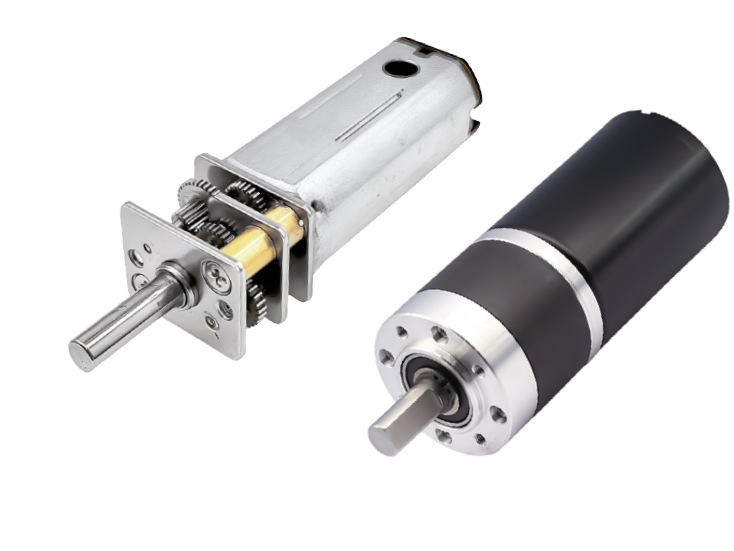
A DC brush motor (also called a brushed DC motor) is an electric motor that uses physical carbon or precious-metal brushes to conduct current into a rotating commutator, which reverses current flow every half-rotation to keep the rotor spinning. It's the oldest DC motor topology in commercial use and, despite decades of competition from brushless designs, still the most common one on the market — largely because it needs no external electronics to run.
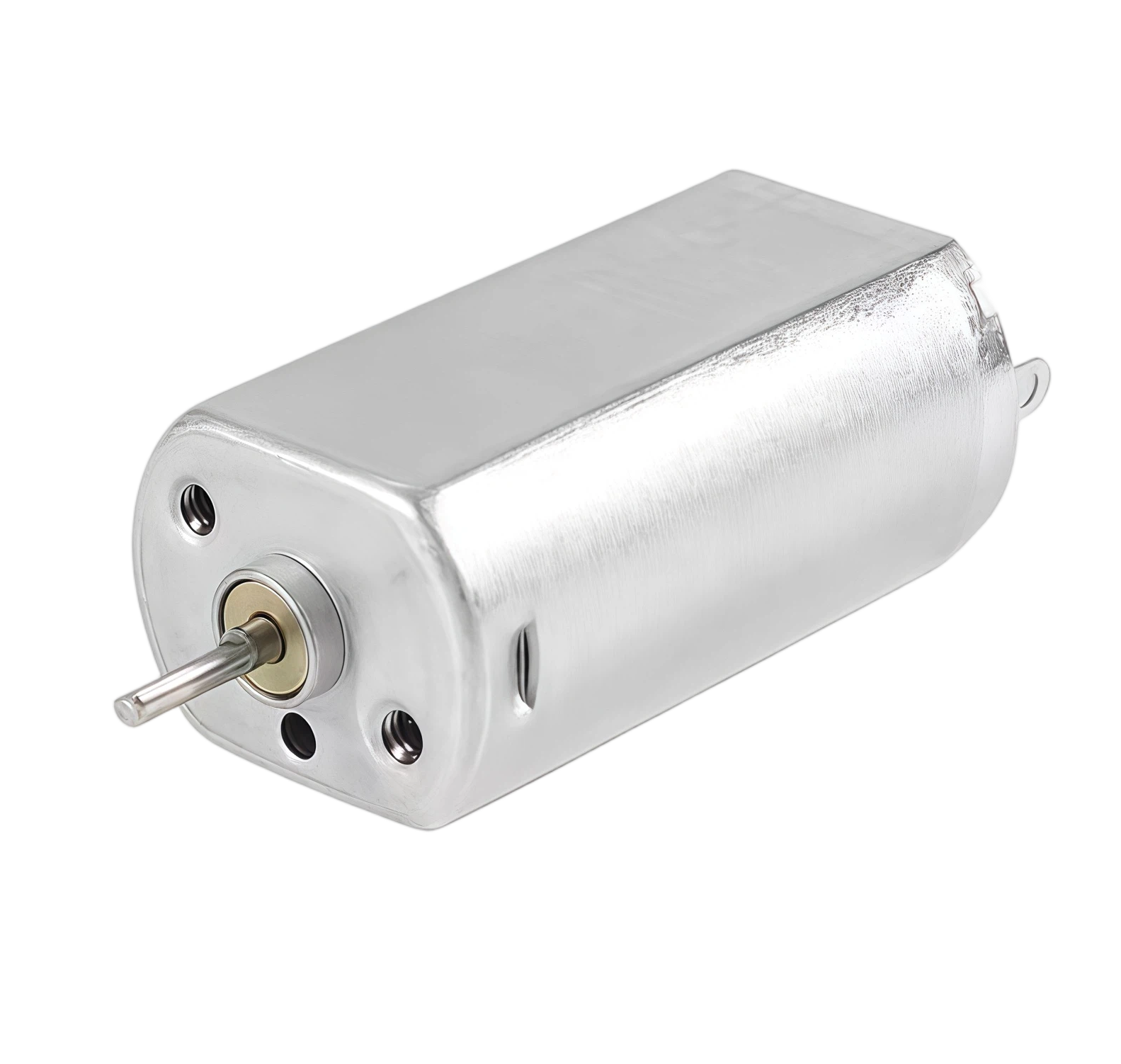
What Is a DC Brush Motor? (a.k.a. Brushed DC Motor)
"DC brush motor" and "brushed DC motor" describe the exact same thing — a motor that converts direct current into rotary motion using mechanical, sliding electrical contacts. There's no technical distinction between the two phrasings; different manufacturers and regions simply favor one word order over the other.
Four parts define the design:
Stator. The stationary outer housing, usually lined with permanent magnets, that provides a fixed magnetic field the rotor works against.
Rotor (armature). The rotating core inside the stator, wound with copper coils. When current flows through these windings inside the stator's magnetic field, the rotor experiences a turning force.
Commutator. A segmented ring mounted on the rotor shaft that switches which winding segment is energized as the rotor turns, so the magnetic interaction keeps producing torque in one direction instead of stalling.
Brushes. Small carbon or precious-metal contacts, fixed to the stator, that press against the spinning commutator to deliver current from the stationary power supply into the rotating winding.
Together these four parts let a simple DC voltage source — a battery, a bench supply, or a basic H-bridge — spin a shaft continuously, with the mechanical switching handled inside the motor itself rather than by external control electronics.
How a Brushed DC Motor Actually Works
Strip away the terminology and the sequence is straightforward:
- Permanent magnets in the stator create a fixed magnetic field around the rotor.
- Current is fed into the rotor windings through the brushes, which stay in constant sliding contact with the commutator.
- The energized winding reacts against the stator's magnetic field, producing a turning force on the rotor.
- As the rotor turns roughly 180°, the commutator segments rotate past the brushes, and the current direction through that winding flips.
- That reversal keeps the magnetic interaction pushing in the same rotational direction instead of settling into equilibrium, so the shaft keeps spinning as long as current is applied.
- Reversing the supply polarity at the terminals reverses the whole cycle, spinning the shaft the other way — no extra circuitry required.
The Role of the Brush and Commutator
The brush's job is narrow but essential: it carries current from a fixed external circuit into a winding that's physically spinning, via sliding contact with the commutator. Without that sliding contact, there'd be no way to keep delivering continuously-reversing current to a rotor that never stops moving — the motor would just lock up at whatever position it started in.
That sliding contact is also the design's biggest structural trade-off. It's what makes brushed motors simple and cheap to drive, and it's what eventually wears out. Brushless motors eliminate this mechanical contact entirely, replacing brushes and a commutator with electronic switching, which removes the wear point but adds a controller to the bill of materials.
The Four Types of DC Motors
"DC motor" is often used loosely, but there are four distinct winding configurations, and brushed construction applies to all of them. (For the modern buyer's split into brushed, brushless, coreless, and stepper, see DC motor types: complete guide.) What changes between types is how the field winding is connected relative to the armature, which changes how speed and torque respond to load.
| Type | Winding configuration | Speed/torque behavior | Typical use |
|---|---|---|---|
| Series-wound | Field winding in series with the armature | Very high starting torque, speed drops sharply as load increases | Starters, power tools |
| Shunt-wound | Field winding in parallel with the armature | Speed stays relatively constant across varying loads | Machine tools requiring steady speed |
| Compound-wound | Combines series and shunt windings | Blends high starting torque with more stable speed under load | Winches, steady-load hoisting equipment |
| Permanent-magnet | Field provided by fixed magnets, no separate field winding | Compact, efficient, linear speed-vs-voltage response | Most small/precision brushed motors, including SLW's catalog |

Series-wound motors put the field winding in the same current path as the armature. Torque is highest at zero speed and falls off fast as the motor accelerates, which is exactly the curve a power tool or an engine starter needs — maximum twist when it's fighting to get moving, less as it spins up.
Shunt-wound motors wire the field winding in parallel with the armature instead, so field strength stays roughly constant regardless of load. That gives a much flatter speed curve, useful anywhere a machine needs to hold a set speed even as cutting or feed load changes.
Compound-wound motors wire in both a series and a shunt field, splitting the difference — enough series winding for strong starting torque, enough shunt winding to keep speed from collapsing under sustained load. Winches and hoists that need to start under load and then run steadily are the classic fit.
Permanent-magnet motors replace the field winding with fixed magnets altogether. There's no separate field circuit to manage, which simplifies the motor, shrinks it, and gives a nearly linear relationship between applied voltage and speed. Nearly every compact, precision brushed motor on the market — including SLW Motor's own catalog, such as the 20mm 180 Micro Brushed DC Motor and the 12mm N30 Micro Brushed DC Motor — is built this way.
Brushed DC Motor Advantages and Limitations
Where Brushed Motors Excel
Low cost. Fewer components and no controller electronics keep unit cost down, which is why brushed motors dominate price-sensitive, high-volume products.
Simple driving. A battery and a switch — or a basic H-bridge for reversing — is enough. No microcontroller, no commutation algorithm, no sensor feedback loop required just to make the shaft turn.
High starting torque. Because current flows directly through the armature windings without any electronic gating delay, brushed motors (particularly series-wound ones) deliver strong torque right from standstill.
Easy speed control. Speed tracks applied voltage in a fairly predictable, near-linear way for permanent-magnet types, so basic PWM or voltage adjustment gives usable speed control without sophisticated drive logic.
What to Watch For
Brush wear. The sliding contact that makes the motor work also wears the brushes down over time, and eventually the commutator surface too. Brushes wear qualitatively faster under high current, high speed, or dusty/humid conditions — but exact service life depends heavily on the specific motor, duty cycle, and environment, so treat any wear estimate as application-specific rather than universal.
Electrical and acoustic noise. The making-and-breaking of contact at the brush/commutator interface generates electrical noise (which can interfere with nearby sensitive circuits) and audible noise from the brushes themselves.
Lower speed and efficiency ceiling. Friction at the brush contact and the practical limits of mechanical commutation cap how fast and how efficiently a brushed motor can run compared with brushless alternatives at the same size.
Sparking risk. In some operating conditions, brush contact can produce visible sparking, which rules brushed motors out of certain explosive or highly sensitive environments without additional shielding.
None of these trade-offs make brushed motors obsolete — they just define where the design fits best. For a full side-by-side against brushless, coreless, and other alternatives, see DC brush motor vs the alternatives, or the brushed vs brushless DC motors buyer's framework for a purchasing checklist.
Are Brushed DC Motors Still Used Today?
Yes, extensively. Brushed DC motors remain the default choice anywhere cost and control simplicity outweigh the need for maximum speed or a maintenance-free lifespan. Common current applications include:
- Power tools — cordless drills, saws, and other tools where high starting torque and low cost matter more than top-end efficiency.
- Automotive accessories — seat adjusters, power mirrors, window lifts, and wiper motors, where basic voltage-based speed control is sufficient.
- Toys and consumer devices — anywhere a simple on/off or reversible drive is needed at minimal cost.
- Automation and robotics subsystems — small actuation tasks (grippers, feed mechanisms, adjustment stages) where a compact brushed motor handles the job without needing a motor controller.
- Precision equipment — including sub-assemblies in medical device and instrumentation designs, where a permanent-magnet brushed motor's simplicity and predictable behavior are assets rather than drawbacks.
The pattern across all of these: brushed motors keep their footing wherever a design can tolerate periodic brush wear in exchange for lower part count, lower cost, and drive simplicity.
Choosing the Right Brushed DC Motor for Your Application
Once you've confirmed brushed construction fits your design, four parameters do most of the work in narrowing down a specific motor:
Voltage. Match the motor's rated voltage to your supply. Small precision brushed motors commonly run anywhere from a few volts up to the mid-20s — for example, SLW's 12mm N20 series is built for 3–6V systems, while its 20mm 180 series runs at 6V and 24V variants depending on the model.
No-load and stall torque. No-load speed tells you how fast the shaft spins with nothing attached; stall torque tells you the maximum twisting force it can produce before it stops turning. Size to your actual load, not just the no-load number on a datasheet.
Speed. Confirm the motor's speed at your operating voltage and expected load falls within what your mechanism needs — speed drops as load increases, more sharply for some winding types than others.
Size and mounting. Shaft diameter, motor length, and mounting face need to fit your housing. Micro brushed motors in this category typically run from roughly 10mm up to 42mm in diameter, depending on the power and torque required.
Beyond the base spec, most precision applications also need some combination of encoder feedback for position/speed sensing, a custom shaft or housing geometry, or a specific housing/gear material — brass, stainless steel, powder-metallurgy alloys, or engineering plastics — to match environmental or wear requirements. SLW Motor supports both catalog configurations and custom-wound, custom-integrated brushed motors (including encoder integration, PCB soldering, and wire harness assembly) built from prototype samples through bulk production.
If you've confirmed a brushed DC motor fits your design, browse SLW Motor's brushed DC motors for stock and custom-wound options, or get in touch with your voltage, torque, and mounting requirements for a tailored recommendation.
Frequently Asked Questions
What is a DC brush motor?
A DC brush motor is an electric motor that uses physical brushes and a rotating commutator to feed continuously-reversing current into the rotor windings, generating the torque that keeps the shaft spinning. It's the simplest and most widely used DC motor design, runnable directly from a battery without a controller.
Are brushed DC motors still used?
Yes. They remain standard in power tools, automotive accessories like seats and wipers, toys, consumer devices, and many automation and robotics subsystems where low cost and simple voltage-based control outweigh the need for maximum speed or a maintenance-free service life.
What are the disadvantages of a brushed DC motor?
The main drawbacks are brush wear over time (requiring eventual replacement), electrical and acoustic noise from the sliding brush contact, a lower practical speed and efficiency ceiling than brushless designs, and a risk of sparking in some operating conditions.
What is the purpose of a brush in a DC motor?
The brush carries current from the stationary power supply into the rotating armature winding through sliding contact with the commutator. Without it, there'd be no way to continuously deliver the reversing current a spinning rotor needs to keep producing torque in one direction.
What's the difference between a brush motor and a brushless motor?
A brushed motor uses physical brushes and a commutator for mechanical commutation; a brushless motor replaces that mechanical contact with electronic switching controlled by a driver circuit, trading added electronics complexity for less wear and a higher speed ceiling. See DC brush motor vs the alternatives for the full comparison.
What voltage do DC brush motors run on?
It varies by size and application — small precision brushed motors commonly run anywhere from around 3V up to the mid-20s or higher, depending on the winding and intended power output. Always check the specific motor's rated voltage rather than assuming a single standard range.