Worm Gear Motor Pros and Cons: Advantages, Limitations & When to Use It
-
 2026.09.21
-
Uncategorized


A worm gear motor trades raw efficiency for three things few other gear types deliver at once: high reduction in a single stage, holding torque without a brake, and quiet running. Whether that trade is worth it depends on your duty cycle, your space envelope, and whether backdrivability is a feature or a failure mode in your design.
What Is a Worm Gear Motor?
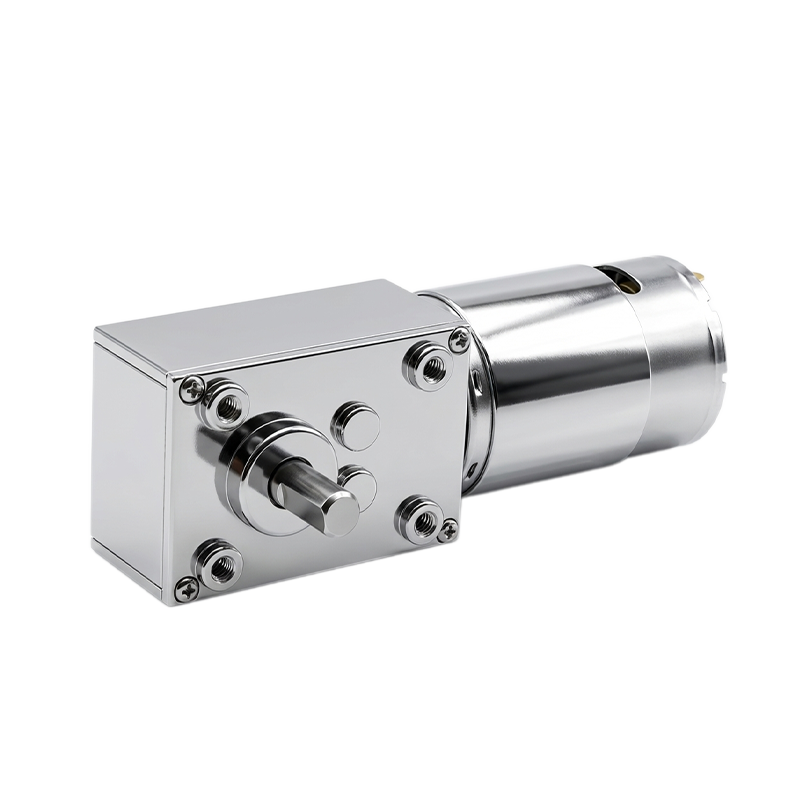
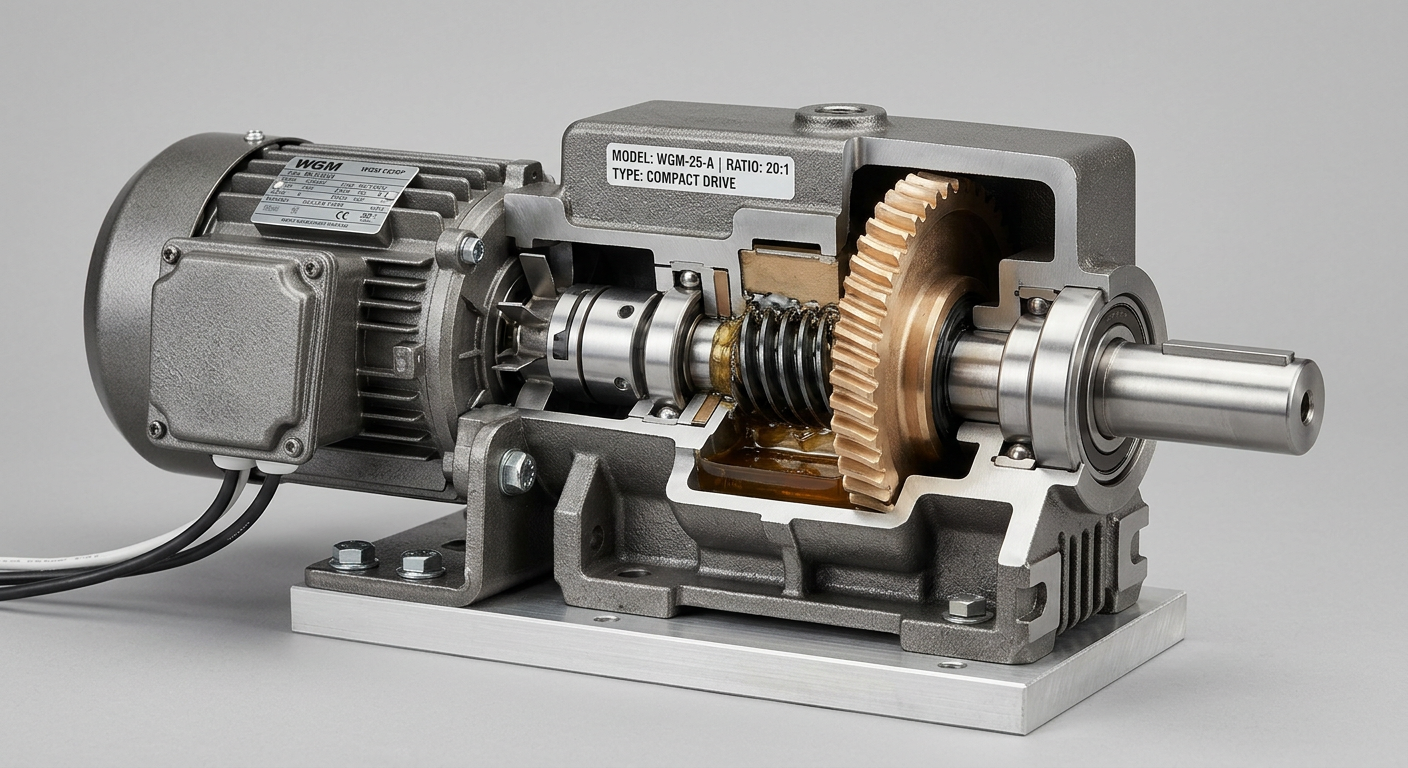
A worm gear motor pairs a screw-like worm shaft with a toothed worm wheel mounted at a right angle to it. Each revolution of the worm advances the wheel by a fixed number of teeth, so a single meshing stage typically covers reduction ratios from around 5:1 up to roughly 100:1 — a range that would take two or three stages in a spur or planetary design. For the full mechanical breakdown — lead angle, start count, gear ratio math — see Worm Gear Motor Explained: The Complete Guide.
Advantages of a Worm Gear Motor
High Torque in a Compact Footprint
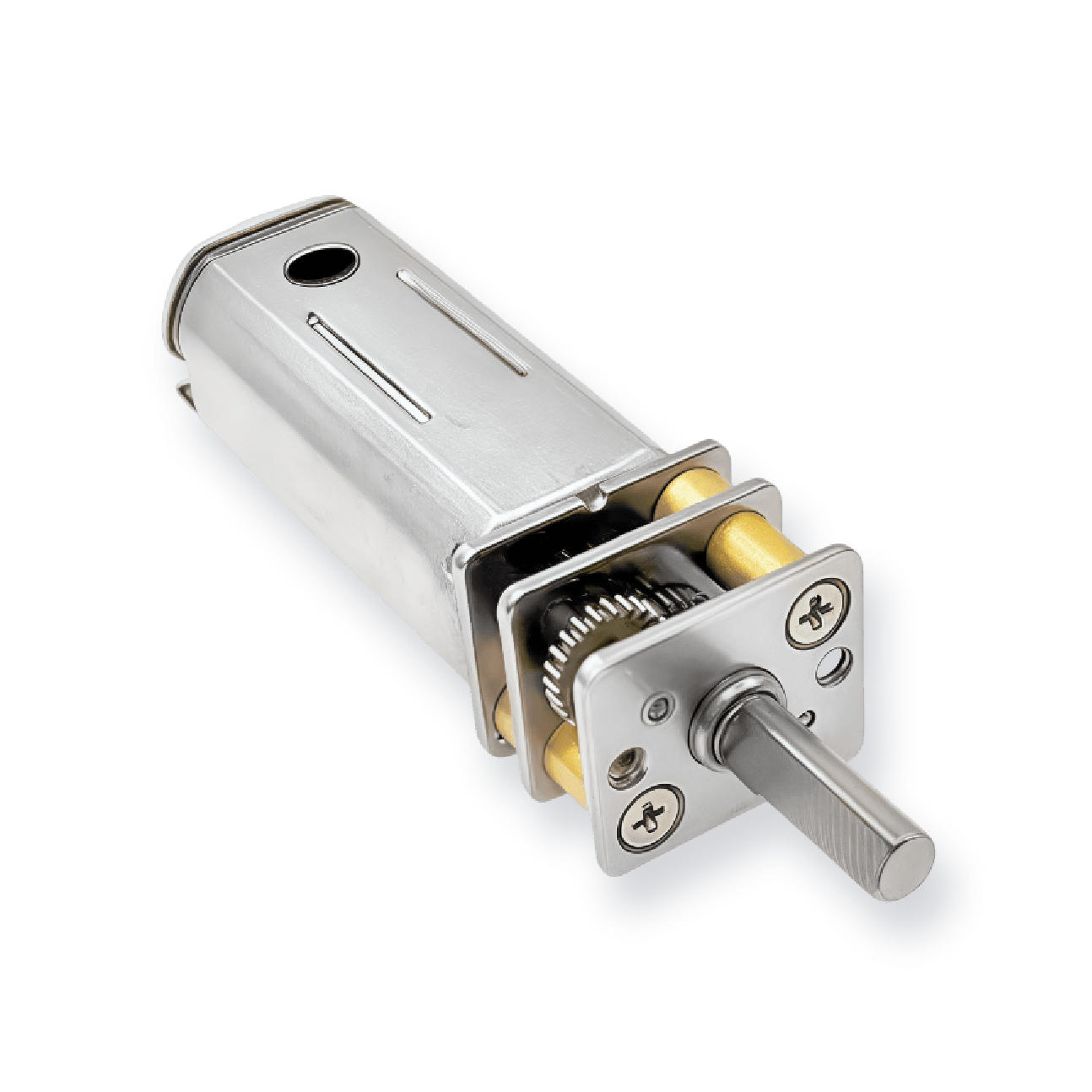
Because one worm-and-wheel mesh replaces what would otherwise need multiple gear stages, a worm gear motor delivers a large speed reduction — and the torque multiplication that comes with it — inside a shorter housing than an equivalent multi-stage spur or helical unit. The 18mm worm gearbox reducer is a practical example: a small-diameter body producing right-angle output torque that a same-size spur gearbox typically can't match in one stage. SLW runs incoming, in-process, and final inspection on each batch, so the ratio and output torque a buyer specs are the ratio and torque that ship.
Self-Locking / Non-Reversible Holding
Self-locking happens when the worm's lead angle sits below the friction angle of the mesh — roughly 5 degrees or less — which in practice tends to show up on ratios above about 30:1. At that geometry the worm can drive the wheel, but the wheel can't drive the worm back, so the motor holds its position when power is cut without a separate mechanical brake. That's valuable for vertical lifts, tilt mechanisms, and any load where gravity or an external force could otherwise back-drive the output. It's a function of lead angle, friction, and lubrication condition, not a guaranteed absolute — see Worm Gear Motor Self-Locking: Holding Force Guide for how to verify holding force against your actual load rather than assume it.
Quiet, Smooth Operation
The worm and wheel maintain continuous sliding contact rather than the tooth-on-tooth impact you get in spur or helical meshing, so worm drives generally run quieter and smoother at comparable speeds. That makes them a common choice in medical devices, consumer products, and lab equipment where audible gear noise is a real design constraint. The 12mm coreless motor with worm gearbox pairs that quiet meshing action with a low-inertia coreless motor for exactly this kind of application.
What Are the Disadvantages of Worm Gears?
Lower Efficiency from Sliding Friction
The same sliding contact that makes worm gears quiet is also why they run less efficiently than helical, spur, or planetary alternatives carrying the same load. As a general engineering rule of thumb, worm meshes run somewhere in the 50%–90% efficiency range depending on ratio, lead angle, and lubrication, while a single planetary stage commonly reaches 95%+ efficiency. Rolling contact in those designs loses far less energy to friction than the continuous sliding action inside a worm mesh. If your application runs at high duty cycle or on a tight power/thermal budget, that gap is worth modeling before committing to a worm stage.
Heat Rise, Lubrication, and Duty-Cycle Derating
Sliding friction that lowers efficiency also has to go somewhere — it shows up as heat in the mesh. Under continuous running, that heat can build faster than it dissipates through a small housing, so worm gearboxes are commonly rated for intermittent duty and need to be derated for continuous operation at the same load. Adequate lubrication matters more here than in rolling-contact gear types: a worm mesh running dry or under-lubricated wears faster and generates more heat, which shortens service life. Sizing a worm gear motor for a continuous-duty application means checking the duty-cycle rating, not just the peak torque figure.
Bulkier Package for a Given Ratio Range
Worm gearboxes win on footprint at very high single-stage ratios, but at moderate ratios a planetary or spur gearbox can often deliver the same output in a shorter, lighter package. If your reduction requirement doesn't actually need worm-level ratios, a multi-stage planetary design may end up smaller overall — worth checking against the alternatives in Planetary vs Spur vs Worm Gearboxes Compared.
Higher Manufacturing Cost / Material Pairing Requirements
Worm and wheel need dissimilar materials — typically a hard worm shaft paired against a softer wheel material — to wear evenly and avoid galling under sliding contact. That pairing, plus the tighter meshing tolerances a worm drive needs to run smoothly, generally makes a worm gearbox more expensive to produce than a comparable spur or planetary unit. SLW machines worm sets in brass, stainless steel, powder-metallurgy alloys, and engineering plastics, matched to the load and environment rather than a single default pairing.
Worm Gear Motor vs. Alternatives
If efficiency, continuous-duty running, or backdrivability matters more than self-locking, a planetary or spur gear motor is usually the better fit.
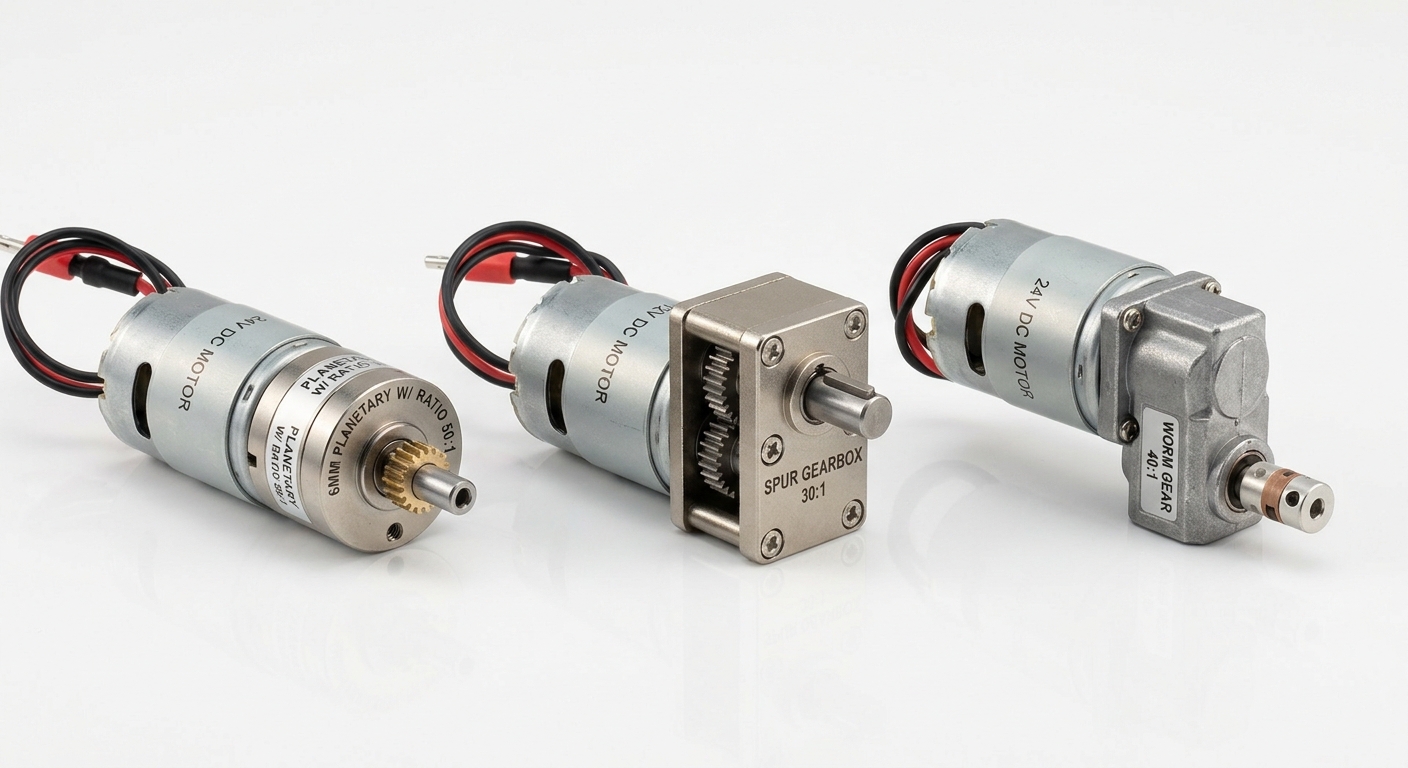
The trade-offs across all three gear types are laid out in Planetary vs Spur vs Worm Gearboxes Compared.
Quick Comparison
| Factor | Worm Gear Motor | Typical Spur/Planetary Alternative |
|---|---|---|
| Single-stage reduction ratio | ~5:1 to 100:1 | Lower per stage, stacked in multiple stages |
| Self-locking / holding without brake | Yes, above ~30:1 with lead angle below friction angle (~5°) | No, generally backdrivable |
| Noise level | Lower (sliding contact) | Higher (meshing tooth impact) |
| Efficiency | ~50%–90% | 95%+ per stage |
| Continuous-duty heat handling | Needs derating; sensitive to lubrication | Generally better suited to continuous duty |
| Manufacturing cost at same torque | Higher | Lower |
When to Choose a Worm Gear Motor (Buyer Checklist)
Choose a worm gear motor when you need:
- High reduction in a single gear stage
- Self-locking holding without adding a separate brake
- Quiet operation for medical, lab, or consumer-facing equipment
- Right-angle output in a space-constrained layout
Reconsider when you need:
- Maximum drivetrain efficiency
- Continuous, high-duty-cycle running without heat buildup
- A backdrivable mechanism (e.g., manual override or force feedback)
Small-form-factor designs still get the full benefit — the 8mm stepper motor with worm gearbox shows the self-locking, right-angle package scaled down to fit tight actuator housings. For the full catalog of ratios, voltages, and housing materials, explore SLW's worm gear motors or talk to our engineering team about matching a worm stage to your load and duty cycle.
FAQ
What are the disadvantages of worm gears?
Lower efficiency from sliding friction (roughly 50%–90% versus 95%+ per stage for planetary gearing), heat buildup that requires derating for continuous duty, a bulkier package once you don't actually need the highest ratios, and higher manufacturing cost from the hard-worm/soft-wheel material pairing.
What is the lifespan of a worm gearbox?
It depends on load, duty cycle, lubrication, and how well the worm and wheel materials are matched to the application — there's no single fixed number across designs. A properly matched material pair, adequate lubrication, and a duty cycle that stays within the gearbox's thermal limits extend service life considerably.
Is it possible to backdrive a worm gear?
Yes, in many cases — backdrivability depends on the lead angle relative to the friction angle, not on the fact that it's a worm gear. Low ratios and shallow leads are often backdrivable; higher ratios (roughly above 30:1) with a lead angle below the friction angle tend to self-lock. Never assume either behavior without verifying the specific ratio and lead against your load.
Which gear motor is best?
It depends on the application. A worm gear motor wins when you need self-locking, quiet running, or a right-angle output in tight space; a planetary or spur gear motor wins on efficiency and backdrivability. Browse SLW's worm gear motors or request a quote to size the right option for your load.